Warehouse QC photos: what each shot can prove, and what it cannot
How to read the quality check photos an agent sends before you approve an item, with a checklist for each kind of product in our aisles.
QC explained, with the seller's clock running
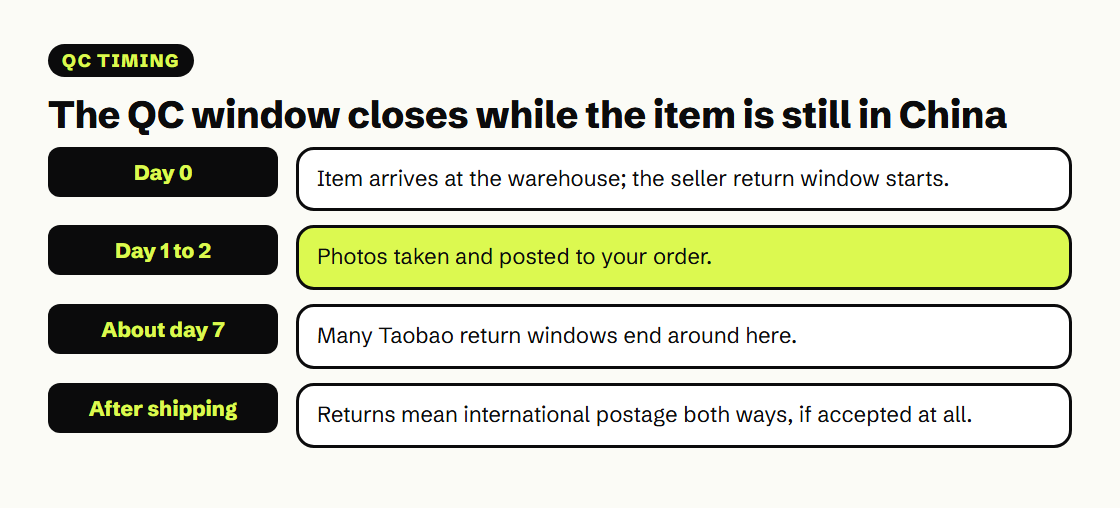
QC means quality check: the photo set an agent's depot staff take when your item arrives from the seller. Most agents include a few photos free with every item and charge for more. The photos have one job: to let you decide, while the item is still in China, whether to accept it or send it back.
That second option is the whole point. Returning an item to a Taobao seller costs domestic postage and a few days. Returning it after it has reached you costs international postage both ways, if the seller accepts it at all. Seller return windows are short, often around seven days from delivery to the warehouse, so photos read late are photos wasted.
A green light, written GL, means you approve the item as photographed. A red light, RL, means you want it returned or exchanged. Some agents ship nothing until every item in the parcel has a green light; others treat silence as approval after a set number of days.
Reading QC photos: the five shots worth asking for
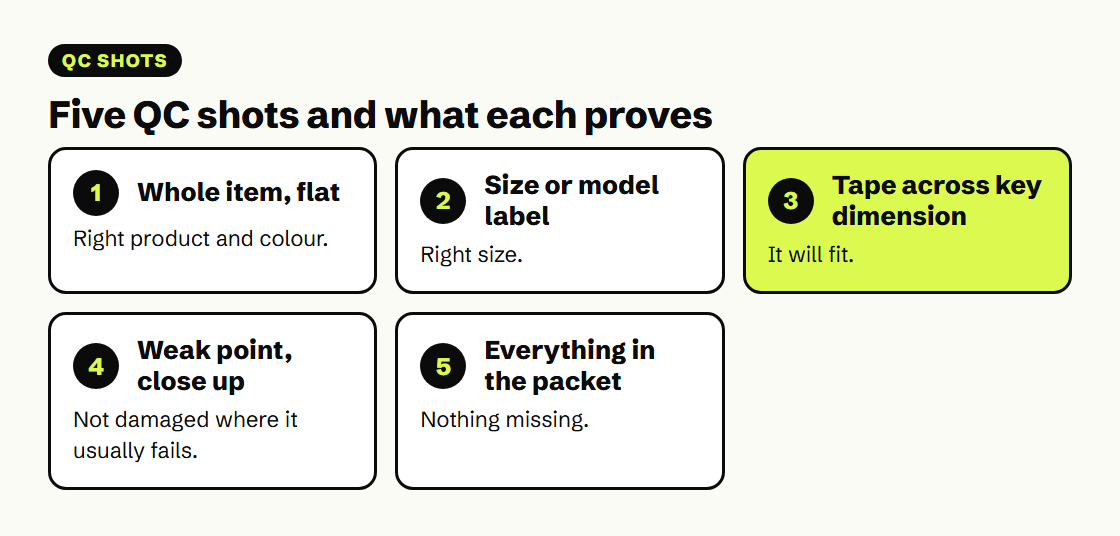
A useful QC set has five kinds of photo. If yours is missing one, ask for it; most agents add a photo or a measurement for a small fee, and some do it free when the item is clothing.
- The whole item, laid flat. Proves it is the right product and colour. Compare the shape and the details with the listing photo, not with your memory of it.
- The size or model label. Proves it is the size you ordered. On clothing this is the neck or waist label; on shoes, the tongue or the inside of the heel.
- A tape measure across the key dimension. Proves it will fit. For tops, chest width from armpit to armpit; for trousers, waist and inseam; for bags, width and depth.
- The weak point, up close. Proves it is not damaged where it usually fails: seams under the arms, the zip, the sole edge, the clasp of a necklace.
- Everything in the packet. Proves nothing is missing: the second piece of a pack, a strap, a dust bag, a charging cable.
Photos cannot prove smell, the feel of a fabric, the exact colour under daylight or whether a gadget works for more than a minute. If any of those matter, ask for a short video or a specific test before approving, and accept that some things only show at home.
Failure points by product, from fleece to fans
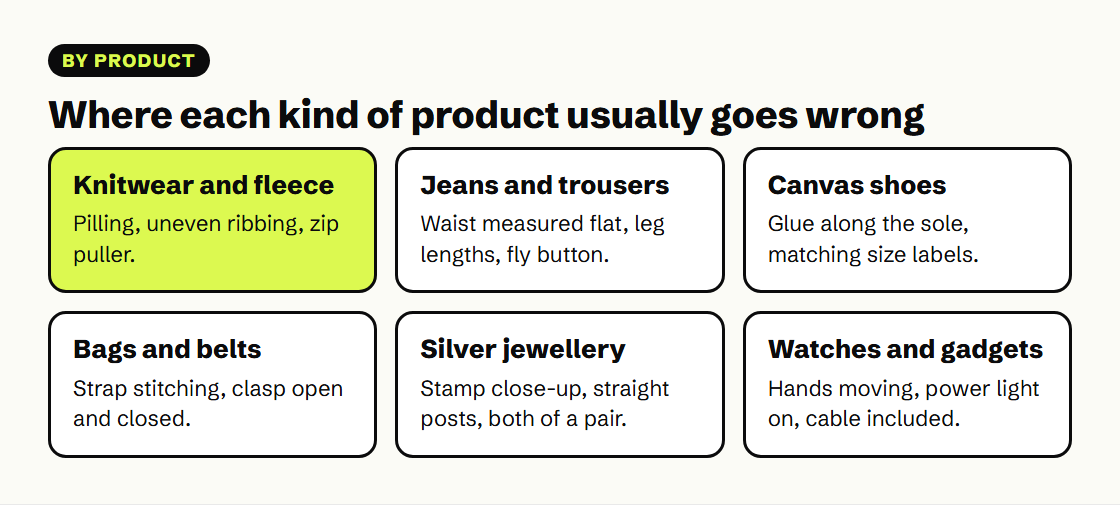
Different goods fail in different places. These are the points we would look at first for the kinds of product on our shelves.
Fleece, hoodies and knitwear
- Pilling or bald patches on the flat-lay
- Cuffs and hem ribbing even on both sides
- Zip runs straight, puller attached
Jeans and trousers
- Waist measured flat, doubled, against your own
- Both legs the same length
- Button and rivets fixed, no loose thread at the fly
Canvas shoes
- Glue marks along the sole edge
- Both shoes the same size on the tongue label
- Toe caps even when the pair is shown side by side
Bags and belts
- Strap stitching at the stress points
- Buckle or clasp shown closed and open
- Inside lining free of marks
Silver and metal jewellery
- Any stamp shown in a close-up
- Posts and clasps straight
- Both earrings of a pair present
Watches and gadgets
- Watch running, hands moving in a second photo
- Speaker powered on, light showing
- Cable and any accessories in the packet
Flat-lay measurements, doubled and compared
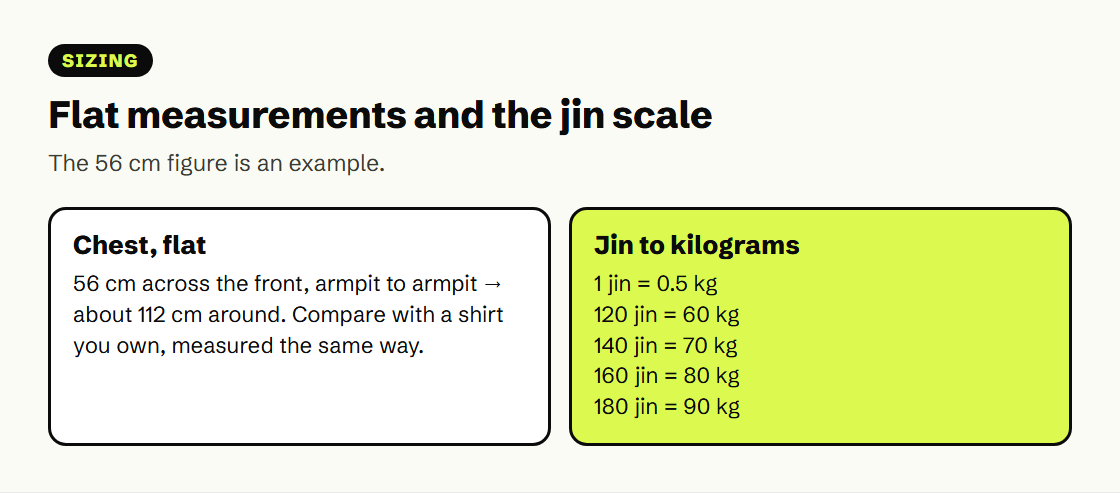
Chinese size charts, and the tape in QC photos, measure garments laid flat. A chest figure of 56 cm on a T-shirt is the width across the front, so the garment's full circumference is about 112 cm. Compare that with a T-shirt you already own and like, measured the same way, rather than with your body measurement; the difference between the two is the ease the designer intended.
Two more conversions catch people out. Many sellers give a weight guide in jin, the Chinese market unit, where one jin is half a kilogram; a size listed for 140 to 160 jin suits someone of 70 to 80 kg. And letter sizes run small against most Western charts, often by one size and sometimes by two on slim cuts, so the chart beats the letter every time.
When you request a measurement in QC, name the exact points: "chest flat from armpit to armpit" is answerable, "please measure the size" is not.
Saying yes, saying no, and asking for more
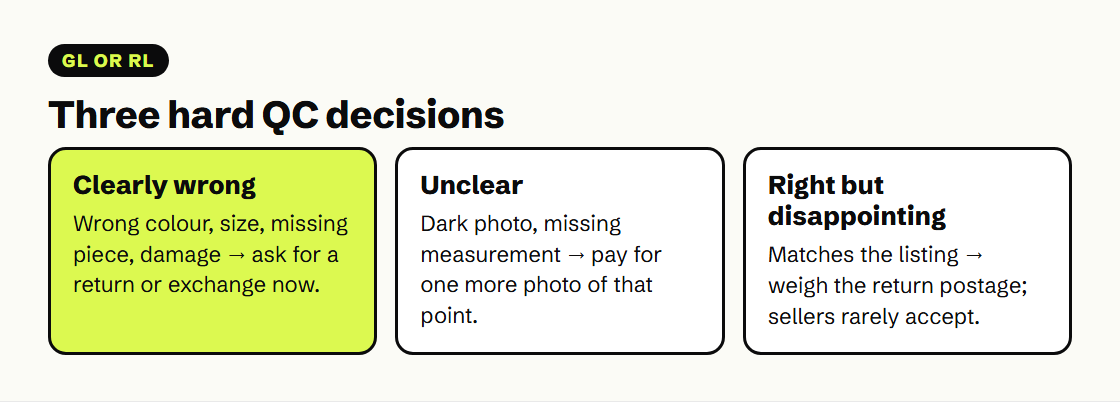
Most QC decisions are easy: the item matches, you approve it. The hard ones fall into three groups.
- Clearly wrong
- Wrong colour, wrong size, missing piece, visible damage. Ask for a return or exchange straight away and say which. The agent arranges it with the seller; you normally pay nothing if the seller made the mistake.
- Probably fine, but unclear
- A dark photo, a missing measurement, a stain that might be a shadow. Ask for one more photo of that exact point. Paying a small fee for a clear answer is cheaper than a return from your country.
- Right, but not what you hoped
- The item matches the listing but looks cheaper than the photos. Sellers rarely accept returns for this, and some charge a restocking fee. Decide whether it is worth the return postage; if the listing was honest, it may be a lesson rather than a claim.
Whatever you decide, decide inside the window. The order errand shows where this step sits among the other nine.